
The Ultimate Pre-Emergent Guide for Tulsa Homes

Winter in Tulsa and Broken Arrow feels quiet in the yard. Grass slows down, weeds seem to disappear, and it is easy to assume spring problems are far away. This is actually the best time to learn how pre-emergents work and to make a simple plan. When the first warm stretch hits, the window can move fast. A little preparation now helps you avoid the spring scramble and makes pre-emergent weed control more effective.
What a pre-emergent really does
A pre-emergent is a preventative tool. It does not kill weeds you can already see. Instead, it forms a barrier in the upper layer of soil that stops many weed seeds from successfully sprouting. If the barrier is in place when seeds wake up, fewer weeds ever reach the surface. That is why pre-emergent weed control is not a one time fix. It is a timing based habit that reduces the number of weeds you have to fight later.
It also helps to know what it does not do. It will not repair thin turf, and it will not replace good mowing and watering. Weeds love open soil. A thicker lawn naturally blocks light and reduces the space where weeds can take hold.
Why winter is the best time to plan
In Tulsa and Broken Arrow, weather can jump from cold to springlike and back again. Those swings are exactly why many homeowners miss the best application window. When soil starts warming, weed seeds respond even if the calendar still says winter. If you wait until you see weeds, you are often late for true prevention.
Winter is when you can look at your lawn and remember where the problems started last year. Was crabgrass heavy near the driveway edge. Did weeds show up first in the thin area by the gate. Did a low spot stay wet and turn into a patchy mess. Those patterns help you plan where pre-emergent weed control needs to be strong and where you can be lighter.
This is also the season to check your tools. If you plan to apply product yourself, confirm you have a working spreader, a way to measure your lawn area, and a plan to water the product in when needed.
Pre-emergent timing for Tulsa and Broken Arrow
Most people want a single date. The better guide is soil temperature. Spring pre-emergents are applied before the main flush of warm season weeds begins to germinate. In our area, that can happen earlier than expected if winter has long mild stretches. The goal is to apply early enough that the barrier is active when the seed starts to sprout.
Think of it this way. You want pre-emergent weed control in place before your lawn looks like it needs it. If you are watching for a visible weed problem, you are watching for the wrong signal.
If you would like a simple seasonal plan that ties together lawn care and weed control, reference this page for local services and timing windows https://paschallslawn.com/weed-control-fertilization/.
How to apply a pre-emergent the right way
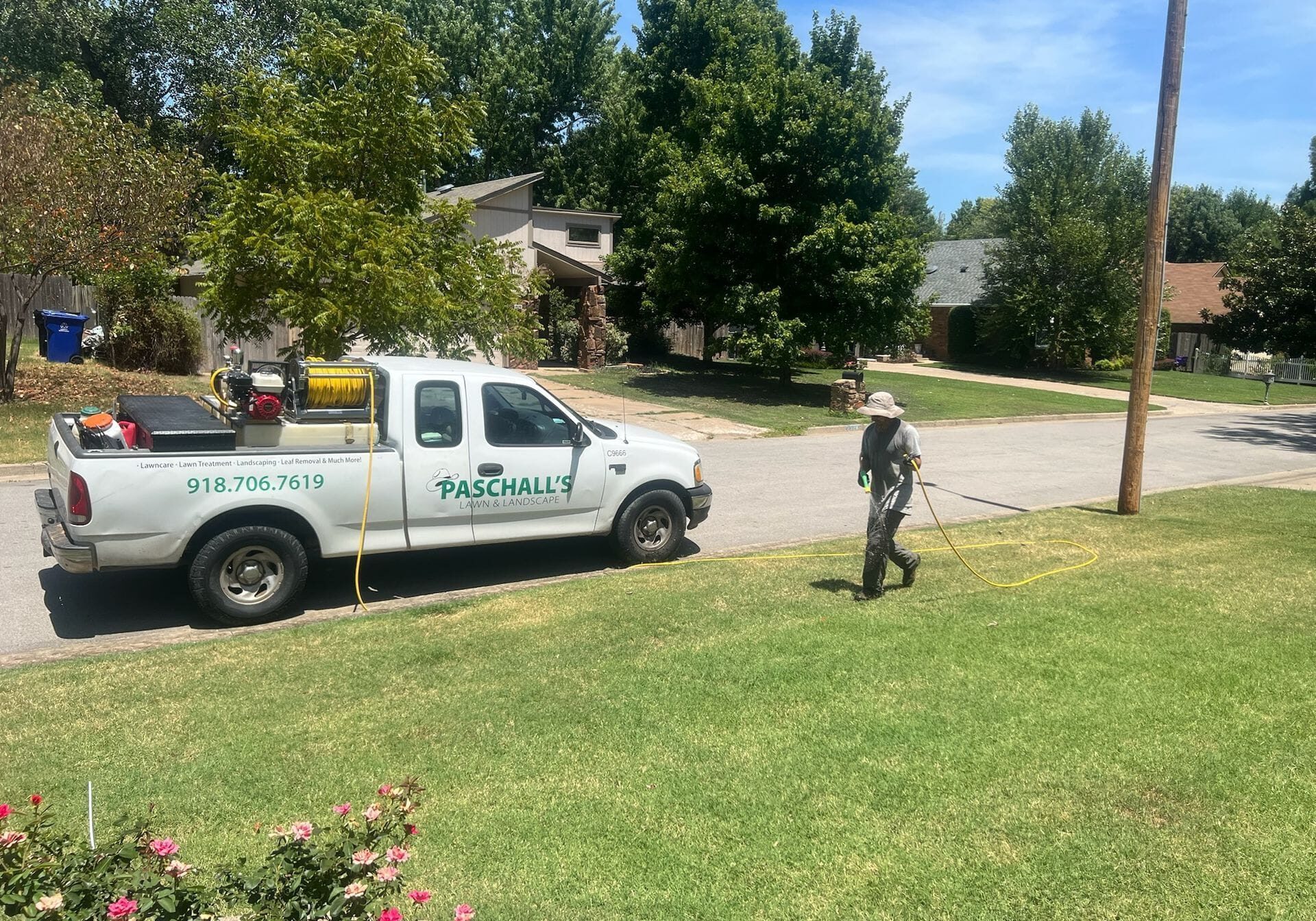
Coverage is everything. Pre-emergents only work where they are applied. If you miss a strip, weeds will appear in that strip. Use a sprayer, walk at a steady pace, and overlap slightly so you avoid gaps. Edge areas matter most. Driveway borders, sidewalks, fence lines, and thin turf are common entry points.
Most products need water to activate. That water moves the barrier into the top layer of soil where seeds germinate. Too little water can leave it sitting on the surface. Too much water too quickly can shift it. Follow label directions and time your application before expected rain or a planned irrigation run.
Another common mistake is disturbing the soil after application. Heavy raking, deep aeration, or aggressive dethatching can break the barrier and reduce results. If you plan aeration, do it first, then apply your pre-emergent weed control after so the barrier stays intact.
Common pre-emergent questions in Oklahoma
Can you apply pre-emergent and seed at the same time? In many cases, pre-emergents interfere with germination. If you know you need to seed bare spots, your timing and product choice need to be specific. Winter is the right time to decide whether you will prioritize prevention or renovation this season.
Do pre-emergents work in beds? They can, and they are often overlooked there. Landscape beds are basically weed nurseries because they contain loose soil, mulch, and sunlight. A bed focused application after cleanup and before mulch refresh can reduce weed pressure in spring. For many Tulsa and Broken Arrow homes, this is a quiet way to keep beds looking clean without constant pulling.
How long to pre-emergents last? The barrier wears down over time and can be affected by soil disturbance, heavy rain, and normal breakdown. That is why many plans include more than one application window across the year, depending on the weeds you see and the lawn you have.
Conclusion
Pre-emergents work best when you treat them as prevention and plan ahead. Winter is the perfect time in Tulsa and Broken Arrow to learn the basics, identify last season’s problem areas, and get ready for the first warming trend. When spring arrives, the window can move quickly. With a simple plan, even coverage, proper watering, and less soil disruption, pre-emergent weed control can reduce weeds dramatically and make your lawn easier to maintain all season.
Keep your property looking sharp all season.
Tell us about your property and get a fast and transparent quote.