
Before You Clean Up Your Landscape This Fall, Know What Should Stay
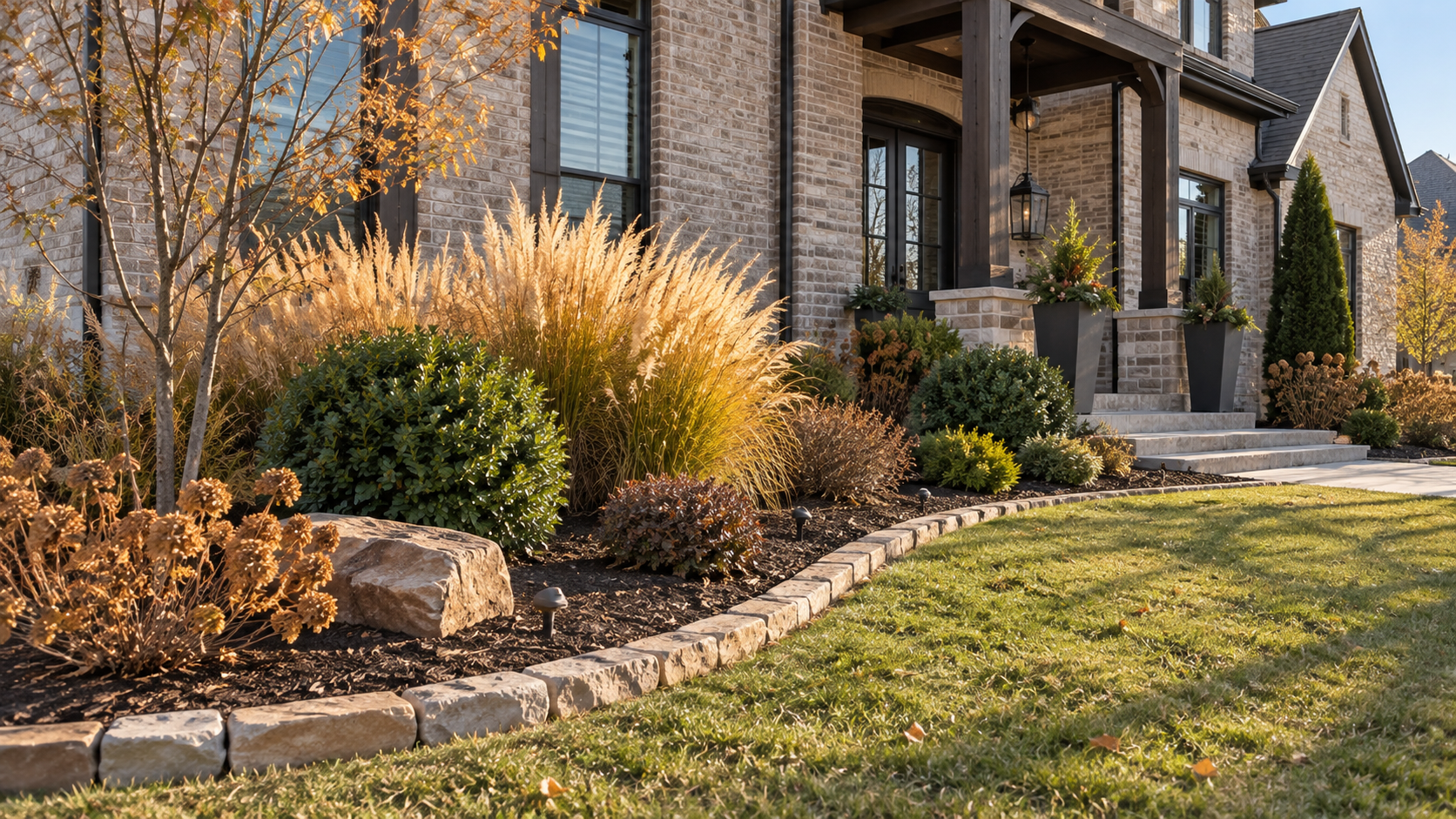
As flowers fade and plants turn brown, it is tempting to grab the trimmers and give every landscape bed a fresh start. Cut the grasses down. Trim the shrubs. Remove the dried stems. Make everything look clean before winter.
But some of those plants still have a job to do.
For Tulsa and Broken Arrow homeowners, fall landscaping should include a closer look at what belongs in the winter landscape. Standing grasses provide texture, perennial stems can shelter beneficial insects, and certain shrubs may already hold next spring’s flower buds.
A clean fall landscape does not necessarily mean cutting everything to the ground.
Fall cleanup does not mean clearing everything
A good fall cleanup starts with understanding what is growing in your beds. A grass that has turned golden for the season needs a different approach than a broken shrub branch or a summer annual that has finished growing.
Before starting, walk through the landscape and look at each plant individually. Notice which plants are holding their shape, which are showing damage, and which are crowding a walkway or entrance.
Clearing paths, removing unhealthy material, and defining bed edges can improve the property without removing every standing plant.
A planting bed may have lost its summer flowers while keeping an attractive shape, a useful backdrop, or a group of seed heads worth leaving in place.
Leave ornamental grasses standing
Ornamental grasses can become some of the most noticeable plants in a winter landscape. Their dried foliage adds height and texture, while the seed heads catch the light and move with the breeze.
Beside a patio or along a planting bed, that structure helps the space feel finished after surrounding plants have faded. Cutting every clump down in October can leave a gap that lasts through much of winter.
Most ornamental grasses can remain standing until late winter or early spring, with cutting timed before new growth begins. This lets you enjoy their winter appearance while preparing them for the next growing season.
The timing and amount to remove depend on the plant. Identify what is growing in your beds before treating every grass or grasslike plant the same way.
Be careful with spring flowering shrubs
A shrub may look quiet in fall while already holding the flowers you hope to see next spring.
Plants such as azaleas and forsythia develop flower buds ahead of their spring display. Trimming those branches simply to make the bed look tidier can remove the buds along with the growth.
The result may not become obvious until spring, when an otherwise healthy shrub produces fewer flowers than expected.
For many spring flowering shrubs, routine shaping is best done soon after the flowers fade. That timing gives the plant an opportunity to grow and prepare for its next bloom cycle.
Before shortening a shrub, find out what it is and when it blooms. Removing a broken or diseased branch is a separate decision from giving the entire plant a seasonal haircut.
Some perennial stems have a purpose
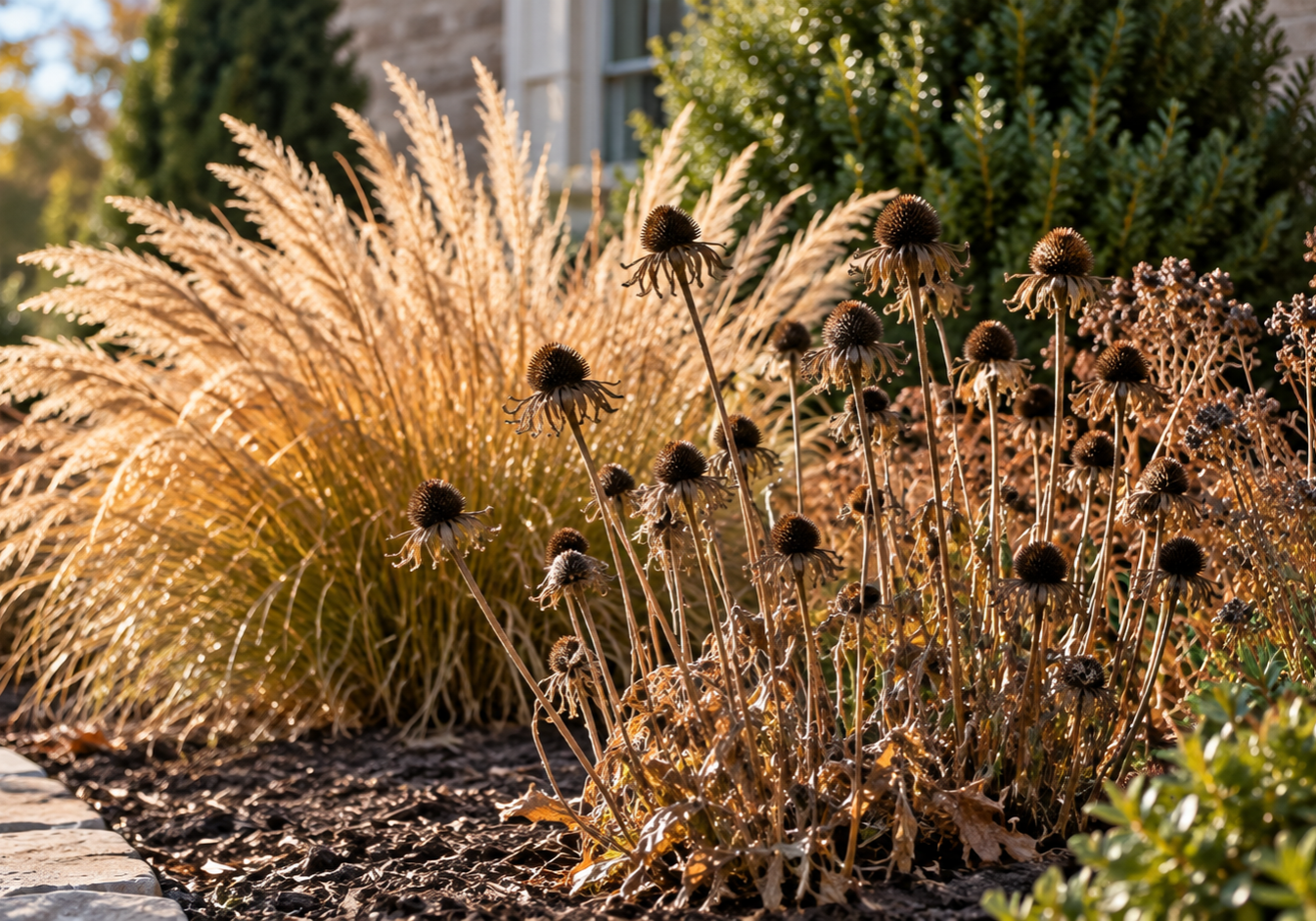
Dried flower stems may appear finished, but some provide shelter for native bees and other beneficial insects. Hollow and pithy stems offer nesting spaces, while remaining seed heads can provide food for birds.
Purple coneflower, goldenrod, and bee balm are examples of plants whose stems can serve a purpose after flowering ends.
You can leave selected stems and seed heads standing while tidying the space around them. If shortening suitable stems for habitat, leave varying heights of about 8 to 24 inches and keep those retained stems undisturbed into the following growing season.
A defined bed edge and a clear walkway can help these areas look cared for while allowing some natural structure to remain.
The grasses and perennial stems in the same bed may need different cleanup schedules. There is no single date when everything should automatically be cut down.
Clean up what actually needs to go
Leaving useful plants standing still allows room for a thorough fall cleanup.
Remove summer annuals once they have died, address broken branches, and clear material that blocks paths or interferes with access. Plants showing disease or damaging insect infestations need attention rather than being left as winter habitat.
Remove and dispose of diseased or pest affected plant material. Keep it out of the home compost pile, where some problems can carry over into the next season.
Heavy leaf buildup on the lawn also deserves attention. Fescue continues growing during cooler weather and needs sunlight. Removing thick layers of leaves helps keep the grass from being covered.
For fall landscape cleanup in Tulsa, these targeted tasks can make a noticeable difference while preserving the plants that still contribute to the property.
Let your landscape have a winter version
A landscape does not have to look like spring all year.
Winter brings more attention to shape, texture, and the way different parts of the yard fit together. Evergreen shrubs can anchor an entry. Standing grasses can soften a fence. Stone borders and defined bed lines can keep the layout visible after flowers disappear.
Look at your property from the sidewalk, front window, and back patio. Notice what still catches your eye and where the landscape suddenly feels empty.
If a bed only looks complete when every plant is flowering, it may benefit from a different mix of plants. An evergreen, a grass suited to the space, or a stronger bed shape could give it more presence through the colder months.
This is where landscape design makes a lasting difference. Choosing plants for their mature size, seasonal appearance, and placement helps the property hold its shape as the seasons change.
Paschall’s landscape services in Tulsa and Broken Arrow include design, plant selection, bed reshaping, and decorative rock. Planning those elements together can help your landscape look cared for throughout the year.
Conclusion
Before cutting your landscape back for winter, take another look at what should stay. Ornamental grasses, selected perennial stems, and shrubs carrying next spring’s buds each deserve a different approach.
Thoughtful fall landscaping in Tulsa starts with understanding those differences. Clean up unhealthy material, keep walking areas clear, and preserve the plants that give your property winter character.
If your beds feel bare once summer color disappears, explore Paschall’s landscape design and installation services. A few well planned changes can help your Tulsa or Broken Arrow landscape feel complete long after the growing season ends.
Sources: Oklahoma State University Extension resources on ornamental grass care, pruning trees and shrubs, plant stems for native bees, and fall garden cleanup.
Keep your property looking sharp all season.
Tell us about your property and get a fast and transparent quote.